UMArm · pneumatic soft robot arm
Keep the compliance.Fix the performance.
Soft robots
LightCompliantFastPreciseStrong
UMArm aims for
LightCompliantFastPreciseStrong
The bet: many actuators, each precisely controlled, packed densely into one arm.
01
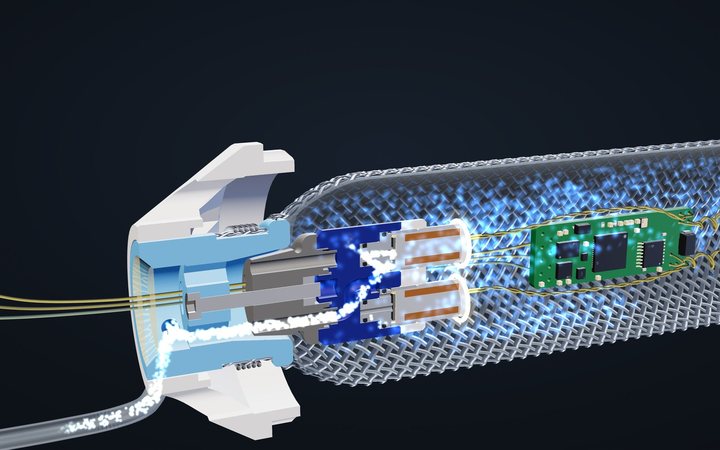
Valves go inside the muscle
IROS 2024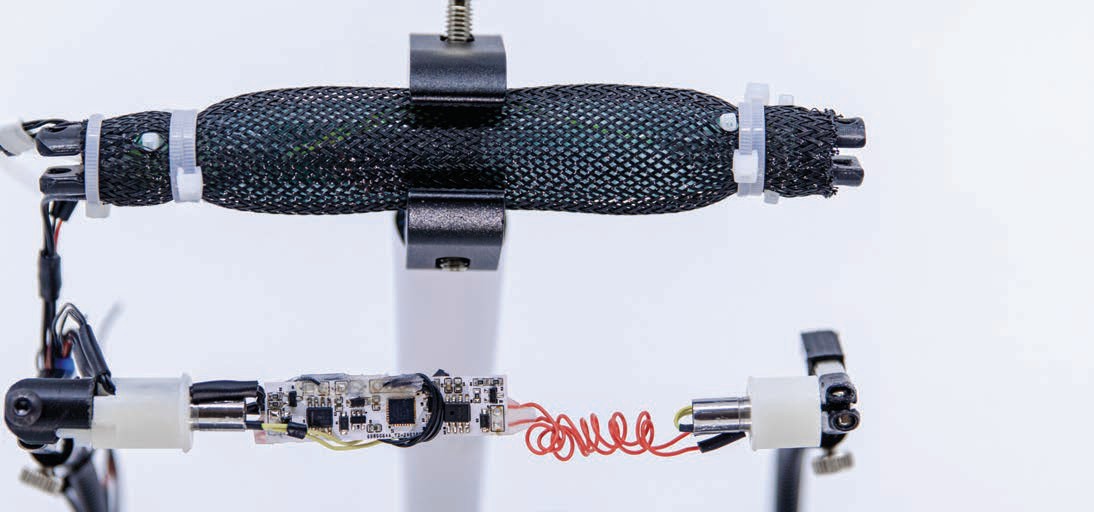 outside
inside
valve
pressure sensor + controller on a flex PCB
valve
Before. One tube per muscle, regulator far away.
Now. One air line and four wires for all of them.
Each muscle carries its own valves, pressure sensor, and controller. Any number of them share one air line and four wires.
- DidTested against an external regulator. No visible delay, where a 100 cm tube adds 100 ms.
- LimitSmall commercial valves cap how fast pressure can change.
- NextPack many of them into one arm.
37–53%
lower pressure-tracking error
vs. an external regulator through 100–25 cm of tube
±0.05psi
pressure deadband
over a 0–40 psi working range
400Hz
pressure loop, in every muscle
valves switch in under 5 ms
02
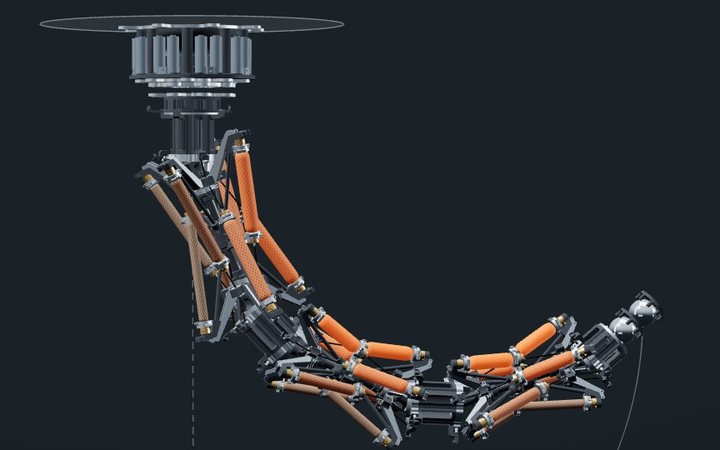
UMArm: 24 muscles on one spine
arXiv 2025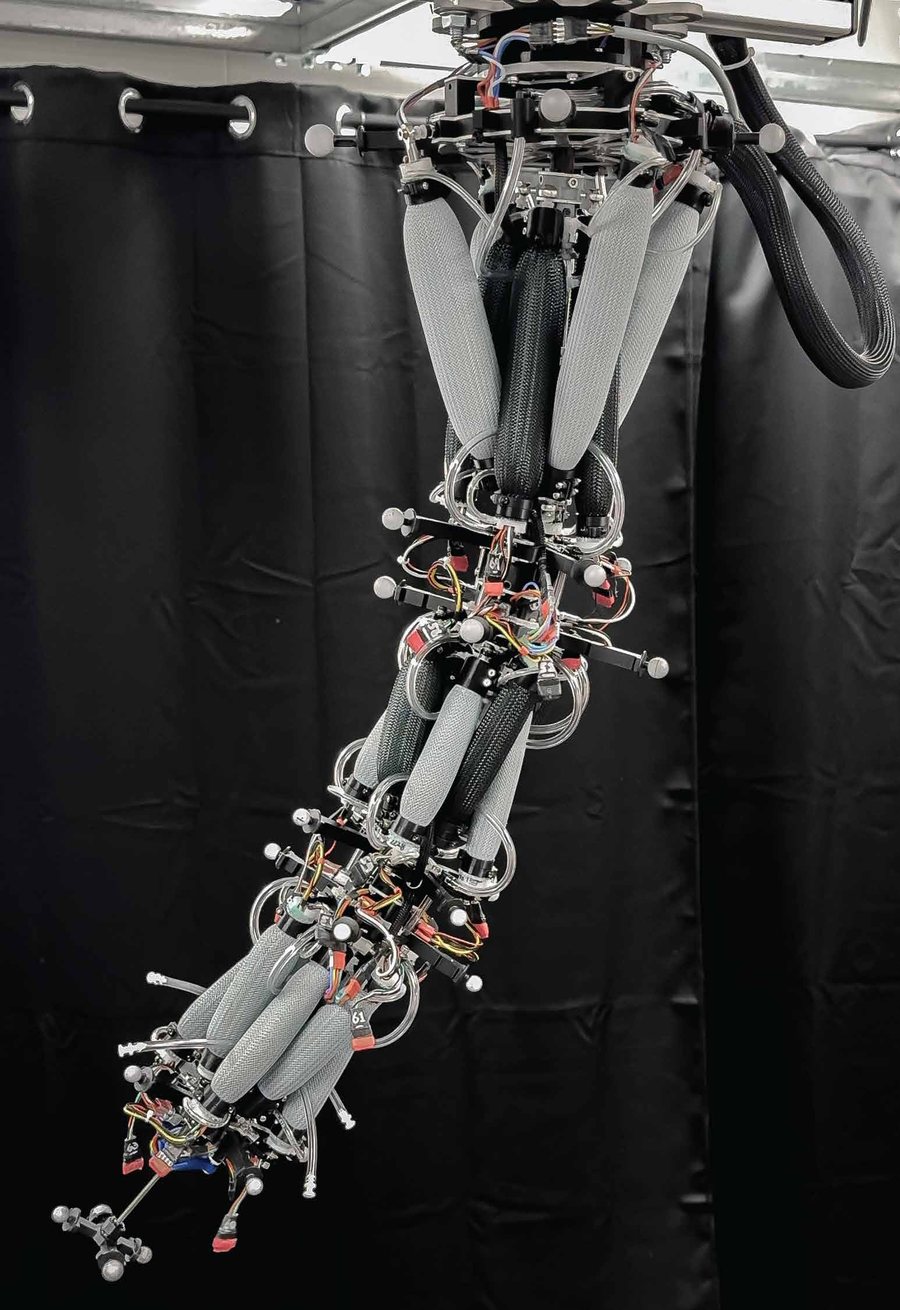
Wearable third arm
Untethered inchworm
Directional stiffness
Stacks within 3 mm
A 1.15 kg arm: a jointed spine pulled by 24 self-regulating muscles. Opposing pairs set where each joint points and how stiff it is.
- DidForce, accuracy, and stiffness tests. Four demos, including an untethered inchworm.
- LimitStiffness was set only at the straight pose. Off-the-shelf joints limit the load.
- NextA stronger skeleton, and compliance control at any posture.
1.15kg
with all 24 regulators on board
comparable soft arms: 1.0–1.6 kg, tethered
53N
peak pull at the tip
comparable soft arms carry 0.3–0.5 kg
0.85mm
steady-state tip error
30 mm for a Koopman-controlled soft arm
9.6×
stiffer along one axis
37.5 vs. 3.9 N/m, measured at one pose
03
ProMax: fast and compliant together
arXiv 2026 · experiments ongoingtargetpen, motion capture
0.75m/s
pen speed
stiffness ellipse steered along the path
21.2mm
RMS error, 0.72 m wide word
earlier controller: 27–31 mm
Writes a word in the air at up to 0.75 m/s, while a learned model predicts and steers how stiff the tip is.
commandpressuretensionmotion + stiffness
- DidCustom joints, 24 muscles on a 150 Hz bus. A three-stage model, with sampling MPC replanning at 50 Hz.
- LimitStiffness in motion is a model estimate, not yet probed by force. Gravity still dominates it.
- NextA much stronger arm, so the muscles, not gravity, set the stiffness.
6.1mm
RMS error at 0.19 m/s
earlier Koopman-model controller: 9.4 mm
4–5mm
tip prediction, 0.4 s ahead
a hold-still guess: 22–33 mm
3.6ms
for 1024 model rollouts
inside a 20 ms planning period
The boards: one controller per muscle
VEMA board family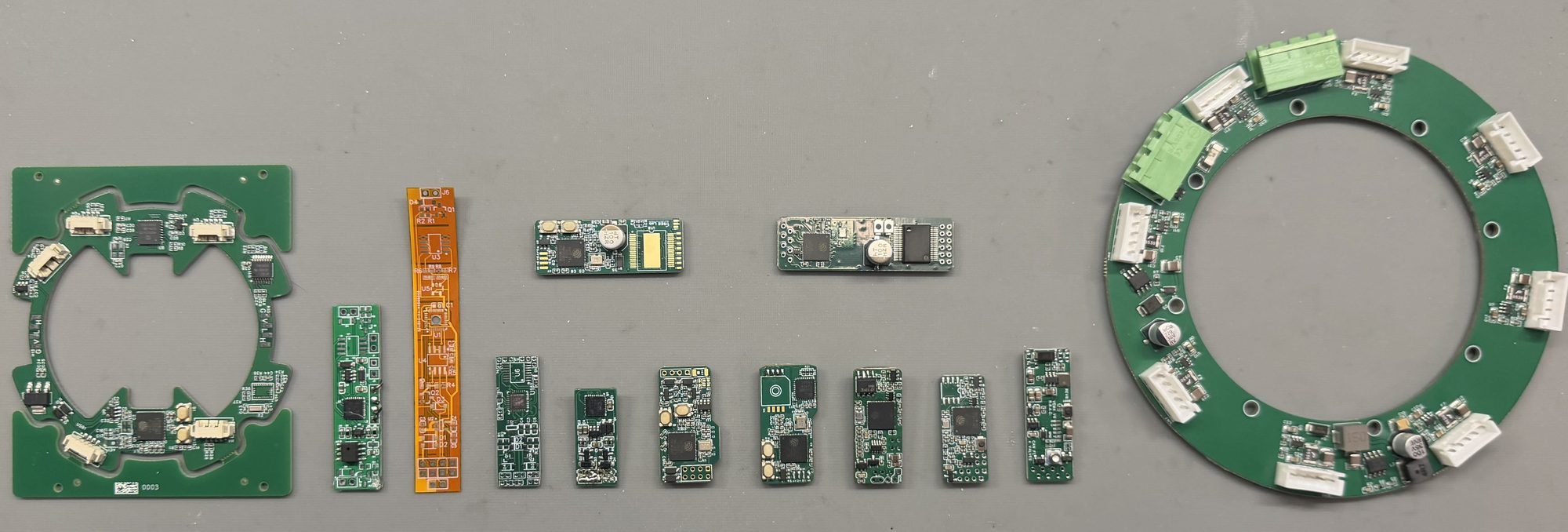 flex board
V6 Rev B · 35 × 12 mm
The family so far · photo
VEMA, the valve-embedded McKibben actuator, needs a board in every muscle: valve drivers, a pressure sensor, a processor, and a bus.
- DidFlex and rigid boards, one revision after another. V6, the latest, drives four valves and talks CAN FD.
- LimitV6 has run its pressure loop on one actuator so far.
35 × 12mm
V6 Rev B: 67 parts on 4 layers
four valve outputs; the 2024 flex board drove two
5Mbit/s
CAN FD data rate on V6
the CAN boards before it: 1 Mbit/s
500Hz
bus cycle V6 was tuned at
the ProMax arm's bus runs at 150 Hz